Showing posts with label Books. Show all posts

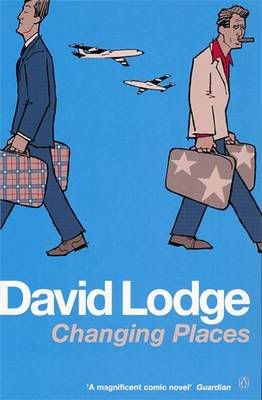
Changing Places by David Lodge

One fine day, when I was done with all the books borrowed from the library and didn't have anything tempting to read from my own collection, my friend lent me the book A David Lodge Trilogy. I had never heard of the author before, but was sure it will not disappoint me since I and my lending friend share similar tastes for books. The trilogy contains three books: Changing Places, Small World and Nice Work.

David Lodge is a British author and has more than 20 books to his credit. His latest book, Deaf Sentence, was released in 2008. His work, Small World and Nice Work were shortlisted for Booker prize and were made into television series later on. How Far Can You Go? won the Whitbread Book of the Year for 1980.

Changing Places is about Philip Swallow, an academic working at Rummidge University and Morris Zapp, Professor and an expert on Jane Austen at Euphoria University. As part of their exchange program, these two gentlemen swap places and assume the job of the other. Swallow is excited with this as he gets an escape from his drudgery, his wife and his kids. He remembers the time when he visited America last and he looks forward to having a wonderful time alone at the States. Zapp, on the other hand, is already tired with his journey and has agreed to this only because his wife has agreed to postpone their divorce if he moves out of their house for six months.

As the both of them settle down with their new jobs and surroundings, they also experience some amount of cultural shock. While Rummidge is a small, rural town where all the people live like one big, family, Zapp misses his night clubs and adventures. Swallow is overwhelmed with the freedom in Euphoria. Both the gentlemen end up having an affair with the other's wife. Some incidents and events in both the places make them want to stay on in their new place rather than go back to their previous lives.

The initial pages of the book took me by surprise. The fine characterization, witty lines, sarcastic humor reminded me of Tom Robbins, another favorite (humor) author of mine. This is the best part of the book. The humor quotient of the book dips as the story progresses. Each chapter of the book is structured in a different way. While the first chapter is laid out like the usual prose, we see another chapter written out in the form of a play and yet another like a script. The author was bringing in some humor no doubt, but it didn't work for me. I felt the author was trying too hard. He should have stuck to the prose structure and tried to add more wit to his story. The book also ends in an ambiguous way where the story just stops abruptly and the reader is left to wonder what happened. I personally don't like stories which end up being happy ones just to please the readers. Any deviation from this is welcome.

Another thing which I really liked about this book is the portrayal of cultural difference. Lodge, being British himself, has had the nerve to laugh at British and Americans alike. In the second chapter especially, where we see Swallow and Zapp settling down in their new places, the contrast that the author draws between the two characters and settings is amazing. Be it the lifestyle (Mrs. Swallow complains that Zapp visited her late at night where as it's just evening), culture (Mrs. Swallow is too polite to ask Zapp to leave), night life (Melanie and her parties), academic life (Swallow has not published any papers, yet he is a lecturer) - all these are so well brought out that I sometimes laughed at myself. I could see the similarities between our culture and the British and I just had to laugh and shake my head in amazement.

At the end of the day, the question is do I recommend this book? I say yes. It's an entertaining book, not a thought-provoking one and serves its purpose of making people laugh. So, go ahead and read it.

It’s not about the bike: Lance Armstrong

A serious reader could not have missed hearing about this book. It has been making news ever since it has been written. I too heard of it but never felt the urge to pick it up and read it. On my recent library visit, I picked this book up for lack of any other choice. I am glad I did it because this was one inspirational read I have done since a long time.

The book is written by Lance Armstrong, a cyclist. It is about his fight against cancer and survival. The author was diagnosed with cancer just when he was at the peak of his career. He was at the advanced stage and had to undergo multiple surgeries and multiple sessions of chemotherapy. The surgeries and chemotherapy drained out the last ounce of energy from his body and left him almost dead. He bounced back and entered the Tour de France and won it and went on to win three more of them. This book is his journey from diagnosis of cancer and his winning the Tour de France.

Armstrong could have easily adapted a tone of feeling sorry to win the sympathy of the world. Instead, he puts up a brave face and wants the world to be motivated by his fight. For Armstrong, the focus is on the fight and the ultimate bouncing back rather than the cancer and the suffering. This I feel is the best part of the book. The tone of the book is one of courage and not of self-pity. This is what made the book work for me.

The book starts with Armstrong’s childhood. He talks about his father abandoning his mother and how his mother struggled to run the house and pay his fees. Armstrong shares a strong bond with his mother and that is evident from the very beginning. They understand each other very well and you wish you had that kind of relationship with your mom. The book goes on to trace Armstrong’s journey as an amateur cyclist and his turning pro. It takes an emotional turn when Armstrong is diagnosed with cancer. His surgeries, his chemotherapy sessions, the way he and his mom read and read about cancer to gain knowledge in order to fight it out – all this makes for a motivating read. The book continues about his recuperation and his decision to get back to professional racing, his wavering between states of self-confidence and depression. There is even a detailed section on IVF, where Armstrong talks openly about his experience.

The book was easy and quick to read. This may not the best book I have read, but it will remain in my memory for a long time. If you are going through a low phase in your life and need some pepping up, this is the book for you.

A Sleeping and a Forgetting : William Dean Howells


I won this book in a giveaway hosted by John Self. I have been following his blog since a long time now and find his reviews insightful. He is one of those readers who doesn't stop at just 'I liked it' or 'I hated it', but goes on to tell us what the book is actually about so that we can decide for ourselves whether to read the book or not.

Melville Hose Publishing has come out with a series 'The Art of the Novella' in which they aim to publish short fiction or novella - too short to be a novel, too long to be a short story. All the books in the series have the same plain yet attractive cover. These are small, weightless books which can fit into your bag or purse and can keep you engrossed for an hour.

This novella is about a woman who witnesses her mother's death and is so shocked at the incident that she stays unconscious for a few days and when she wakes up from it, she doesn't remember the incident. The shock damages her memory and she forgets people, names, faces and incidents. A doctor starts treating her at her father's request. The rest of the book is about the doctor's interactions with the patient and this is the best part of the book. I found myself thinking about the exchanges between the doctor and the woman about dreams, reality, memory, character, identity and so on. One particular passage that I found really interesting:
He had always said to himself that there could be no persistence of personality, of character, of identity, of consciousness, except through memory; yet here, to the last implication of temperament, they all persisted. The soul that was passing in its integrity through time without the helps, the crutches, of remembrance by which his own personality supported itself, why should not it pass so through eternity without that loss of identity which was equivalent to annihilation?

The passage might not seem relevant here, but works really well in the book.

I have to sincerely thank John for two things. One, for hosting the giveaway and two, for introducing me to W.D.Howells. If not for the giveaway, I would have never discovered this author. The book was like a treat - short and sweet. It was entertaining as well as thought provoking. If only I could get hold of more books from this series - don't know how many more gems it holds.

PS: This novella is available online.

The Lovely Bones : Alice Sebold


Almost everybody on my book forum was raving about this, so I had to read it to know what all the hype was about. It often happens that a hyped book fails to impress me and this is so true about this book.

The Lovely Bones is about Susie Salmon, who is raped and murdered by her neighbor. She goes to heaven and looks at Earth and narrates the story about her murder and her family's plight after her death. The cops are unable to locate her body, but even though Susie knows where it is, she doesn't have the power to reveal its location to those on Earth. The book traces the lives of Susie's family, her friends and her murderer for a few years post Susie's death.

I loved the character of Susie's father but her mother irritated me. I feel her actions were not justified. Another character, Ruana Singh, Susie's friend's mother is mysteriously interesting - was it intentional or the author just left out certain parts about this character? Susie's grandmom is another person who stays with you for sometime.

The book grabs you from the first page. The initial few pages are disturbing, that is where Susie describes her rape and murder. It is more so disturbing because the tone of the narrator is very plain, emotionless. The pace dips a bit somewhere in the middle of the book and I lost interest there. I could see what was coming and that bored me.

What I liked most about this book is the author's take on the heaven. She uses her imagination to create what heaven could be like and after you read her version, you feel that is exactly how heaven should be. I liked the storyline, but felt the author could have done better than this. Many people will disagree, so be it.

It is not a must-read, but it is a nice book if you don't have anything compelling to read.

PS: The book is going to made into a movie. It will be interesting to see how heaven is picturized!

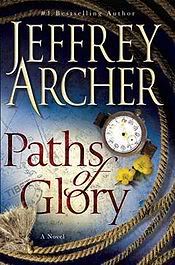
Paths of Glory – Jeffrey Archer


Paths of Glory is a fictionalized account of George Mallory, a mountaineer who tried to conquer the Mount Everest in 1924, but nobody knows whether he succeeded because he died during that attempt. It is not confirmed whether Mallory died on the way down (which makes him the first man to have scaled Mount Everest) or on the way up. Many people believe that Mallory died before he climbed the highest point. Jeffrey Archer thinks otherwise. A newspaper in New Zealand called Archer’s book an insult to Sir Edmund Hillary, who is hailed as the first man to reach the top of the world.

This book is Archer’s take on this mystery. The book opens with the discovery of Mallory’s body on the mountain, so there is no need to guess the hero’s fate later in the book. Archer builds up readers’ confidence in Mallory by depicting him as a man with special skills. He shows Mallory as a courageous kid who doesn’t know what fear means. He portrays Mallory’s character in such a way that it is hard for the readers to believe that Mallory can fail at anything.

Keeping the mystery and the controversies aside, this book is an entertaining read. Archer is a wonderful story teller and knows how he should paint his characters so as to please his readers. He knows when to end a chapter to ensure that the reader hops onto the next one without any interval. I have always liked Archer for his gift of engaging his readers in an entertaining story with interesting characters. Reading Archer is like watching a Hindi masala movie – quick, entertaining and thrilling. This might not be the best book of Jeffrey Archer, but it still is a good book to read.

The Music Room: Namita Devidayal

The review.

My Sister's Keeper: Jodi Picoult

Read the review here.

The Secret Life of Bees: Sue Monk Kidd

The review is here.

The English Patient: Michael Ondaatje

The review is here.

An article on Jasper Fforde

If you haven’t read Jasper Fforde yet, then I urge you to do so. And so does Pradeep Sebastian in his article which appeared in Hindu this Sunday.

On Chesil Beach: Ian McEwan.

Review is here.

My Name Is Red: Orhan Palmuk

Review is here.

The Accidental: Ali Smith

Review is here.

The Razor's Edge: Somerset Maugham

Review is here.

The Eyre Affair: Jasper Fforde

Review is here.

Q&A: Vikas Swarup

Q&A: Vikas Swarup - book review.

Runaway: Alice Munro

My review of Alice Munro's Runaway is posted here.

The Shadow Of The Wind: Carlos Ruiz Zafon

My thoughts on this book can be found here.

Jane Eyre: Charlotte Brontë


I already had an overdose of classic this month with The Great Gatsby and The Picture of Dorian Gray and that was a good reason not to pick any other classic for the next six months. Even then, I picked up Jane Eyre and th only reason being I want to read Jasper Fforde's The Eyre Affair and I was told that I will appreciate the latter book better if I read the former one.

The book is noted for its strong main character. Some even compare her to Lizzy of Pride and Prejudice, but I prefer Lizzy any day to Jane Eyre. Jane Eyre, as the title suggests, traces Jane's life and gives us a glimpse of her childhood, her thoughts and opinions. The book is written in autobiographic style where Jane Eyre is directly addressing her audience. They say the book is actually an autobiography, because the author Charlotte Brontë led a similar life.

The language, description, dialogues, setting, characters - all are typical classic style. What probably is different is the main character. She is not the typical English lady - born rich, well brought up, polished and lady like. On the contrary, Jane is made orphan early in life and sees a bad childhood at a relative's house. She is then sent to a charity school where homeless girls are expected to live an colorless life mostly spent in praying. She turns out to be skillful and well educated. She works as a teacher for a few years and moves on to become a governess. There she falls in love with a man much elder to her. I cannot proceed further without being a spoilsport, so I shall stop.

While I did not feel like putting the book down, neither did I feel good after finishing it. I finished it only yesterday and there is nothing significant about the book I remember. I never felt like pausing at a paragraph and re-reading it. Neither did I feel that a quote was so profound that I had to mark it. In short, I didn't take back anything from the book. It was like a story - which I read with some indifference. I do not feel anything towards Jane Eyre - no sympathy, no love, no hatred - nothing. I did feel she was childish and was irritated with her in the pages that describe her courtship days.

This book goes on to strengthen my opinion that I don't really enjoy reading a classic. Well, I am glad I am done with Jane Eyre. I can at last start with The Eyre Affair.

The Bridge Across Forever: Richard Bach

This book is a favorite of, or at least has impressed, many people I know. When I first picked up this book, I thought I was too young and I postponed reading it. The second attempt was when I was in college. For some reason, I had to put it down. Now, in the third and final attempt, I finally succeeded in finishing this book. Now that it is over, I wish I had read it in my younger days, when I used to fantasize about my soul mate, my Mr.Right, where he was and whether he too was wondering about where his soul mate is. After nearly 3 years of marriage, all notions of Mr.Right and Prince Charming are out of the window and this book sounds like a big joke. Just to clarify, I don't mean to say I am not happy with my husband, I just want to say that nobody is perfect, there is no Mr.Right. We all have to make some compromise no matter who we choose as our life partner.

Let's come back to the book. As the preface says, "it's about a knight who was dying, and the princess who saved his life." In general, it's about a guy who almost always day dreams about his soul mate and fantasizes about making a perfect couple. It would have sounded credible if the guy in question hadn't had a failed marriage. The book is the author day dreaming aloud.

The book begins on a good note. It starts with the author realizing that it is high time he looked out for his soul mate. He wonders the whereabouts of his soul mate and these few pages sound like they are straight out of a teenager's personal diary. Mine would have been similar too, if I had kept a diary. On one hand he is searching frantically for his soul mate, while on the other he loves his freedom over anything else and does not want be to tied to one woman. These are contradictory, I know, and I kept asking myself how much sense that makes.

He finally meets a woman and he is completely mesmerized by her. He decides to have a platonic relationship with her and starts calling her his 'sister'. When I read this, I just cringed. It brought back memories of all those incidents in my college, where every other guy and girl became brother-sister because they wanted a license to go out with each other. And most of these bro-sis pairs are married now, happily or otherwise. No guesses here, the sister doesn't remain a sister forever and he finds himself in bed with her. I knew I should have stopped reading the book at this time, but I pushed myself to carry on.

The couple spend time doing nothing but exchanging mushy-mushy words and general gyan on life and love. They are supposed to be learning and growing up. A book cannot have just a few romantic scenes and fights. You need a story, right? So, throw in a few incidents like the protest against cutting trees and author going bankrupt. No where in the book does the author come across as someone who is about to lose every penny he owns.

"What's written here happened in fact very nearly the way it's turned out in print" says the author in the preface. I have my own suspicions because certain incidents are quite unlikely to happen. The out-of-body experiences, the author's dreams in which he meets his past and future, the couple dreaming together, the deja-vu's - I mean, how can one believe all that? They say, a book needs a problem which the readers want to see solved. The problem about this book is it doesn't have a problem. Everything is sugar sweet, the author never takes off his pink glasses and uses his heart more often than his head.

If mushy-mushy, lovey-dovey, melodramatic Karan Johar movie is your taste, you will love this book. If you are too burdened with practicality of life, want to be lost in a world where there is no problem, pick this up and escape into the author's world.

Edit: I just now read that the so-called perfect couple of this book are no longer a couple; they have separated. I hope Bach does not end up writing another book to justify this act.